Northern Lights in Iceland
One of nature's most magical lightshows — and where to find it.
What are the Northern Lights?
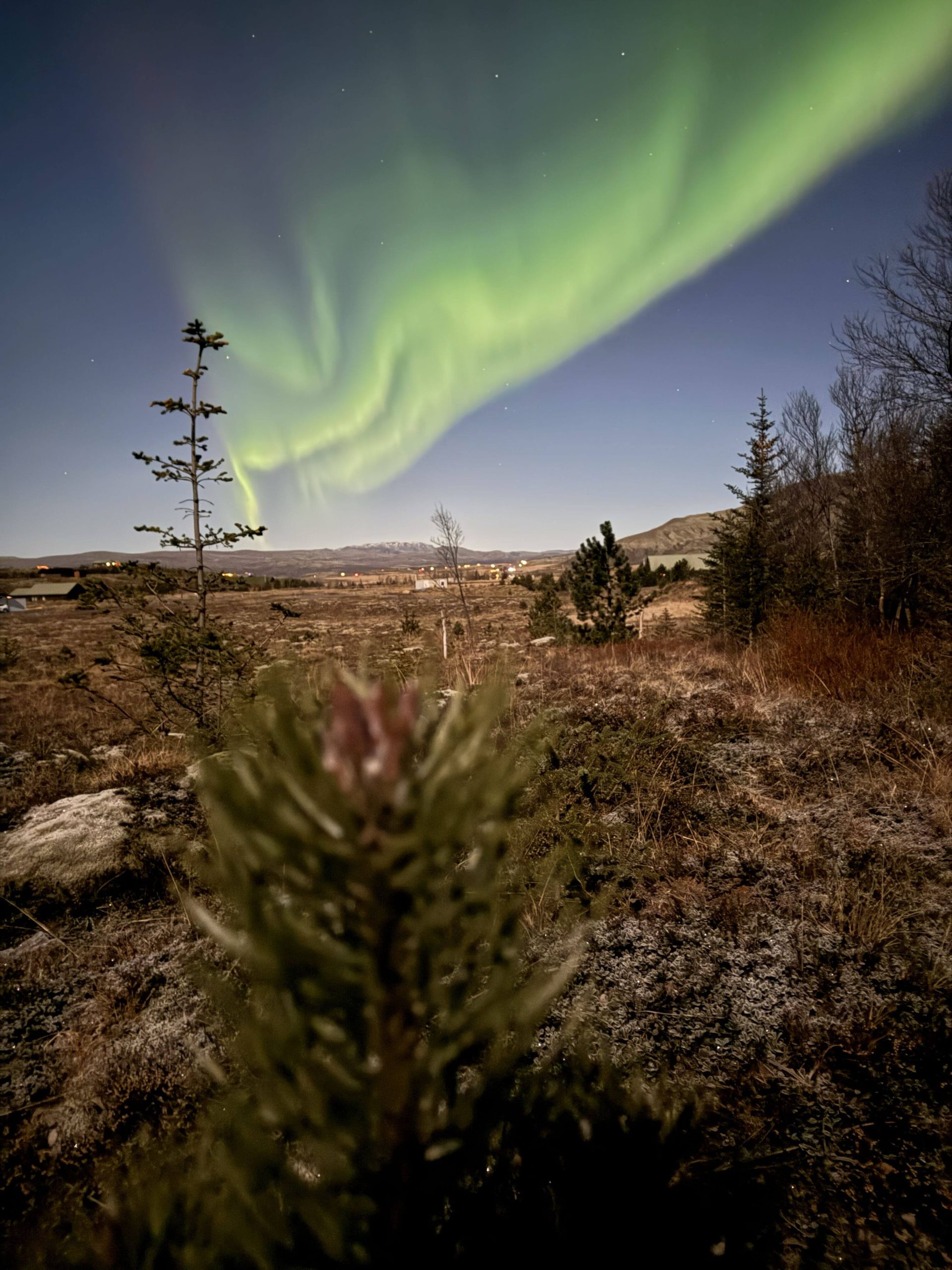
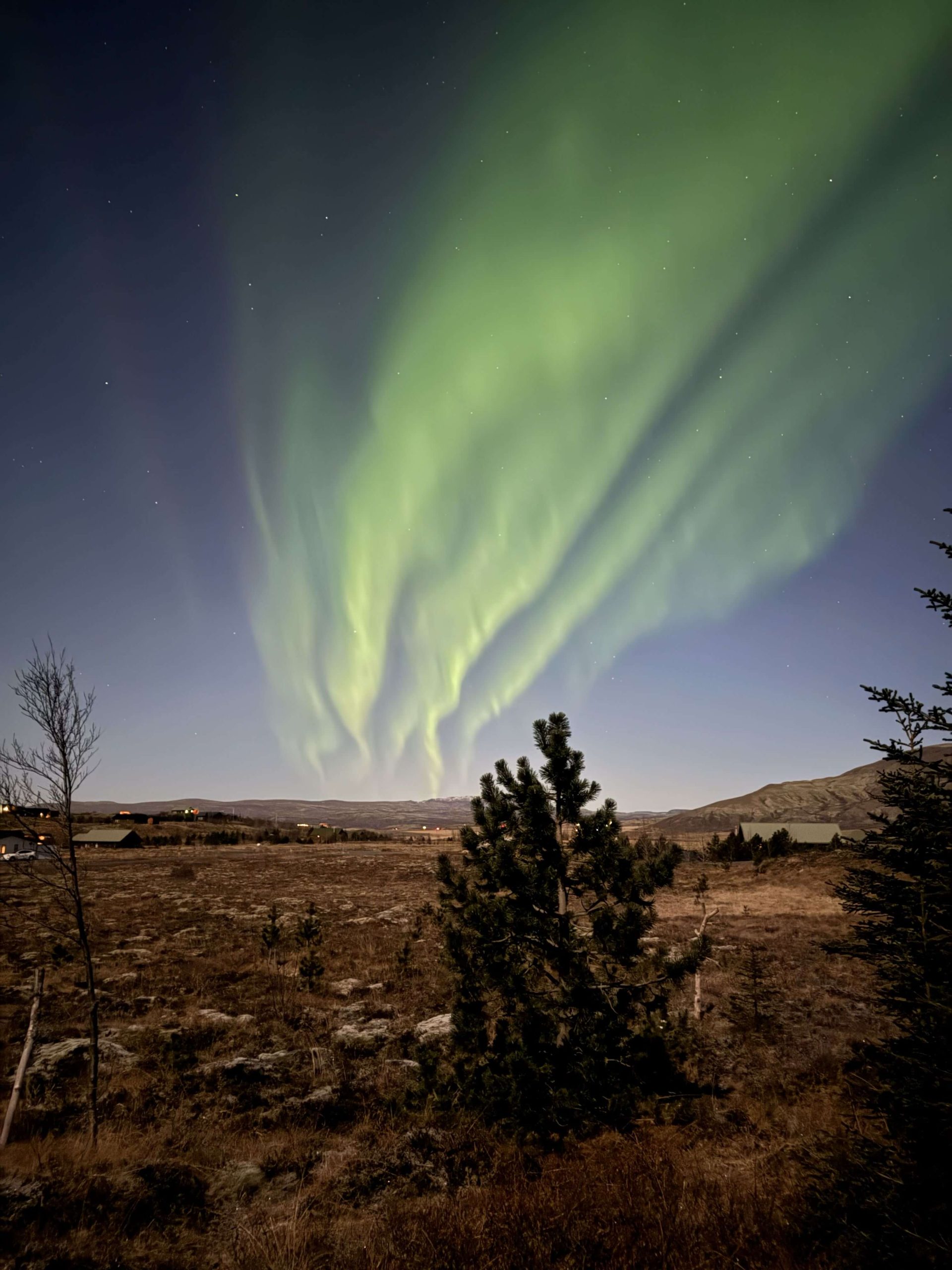
The Northern Lights are caused by the interaction of charged particles from the sun (called solar wind) when they collide with the Earth's magnetic field at high speed. When this happens, most of the particles are pushed back, but a small part escapes into the Earth's magnetic field and forms a collar around the magnetic poles, at an altitude between 100 and 250 km. The green light (sometimes yellow and red) appears due to excited oxygen and nitrogen molecules in the atmosphere.
Why you can see Northern Lights in Iceland
There are a few reasons why the Northern Lights can be seen very well in Iceland. Firstly, Iceland sits in the northern region of Europe, at a high latitude (64° to 66° north) — perfectly placed for aurora viewing. Secondly, it is easy to find dark spots in Iceland without light pollution, and the Northern Lights are best seen in total darkness.
When and where you can see Northern Lights
From late August until mid-April you can see the Northern Lights in Iceland. The spectacle requires dark and clear skies. Changes in the solar wind cause the collar to expand and shrink, so the lights can be seen at different latitudes. Very rarely, the sun sends enormous amounts of material — so-called solar jets — toward the Earth, and when they reach us the lights can be seen at much lower latitudes.
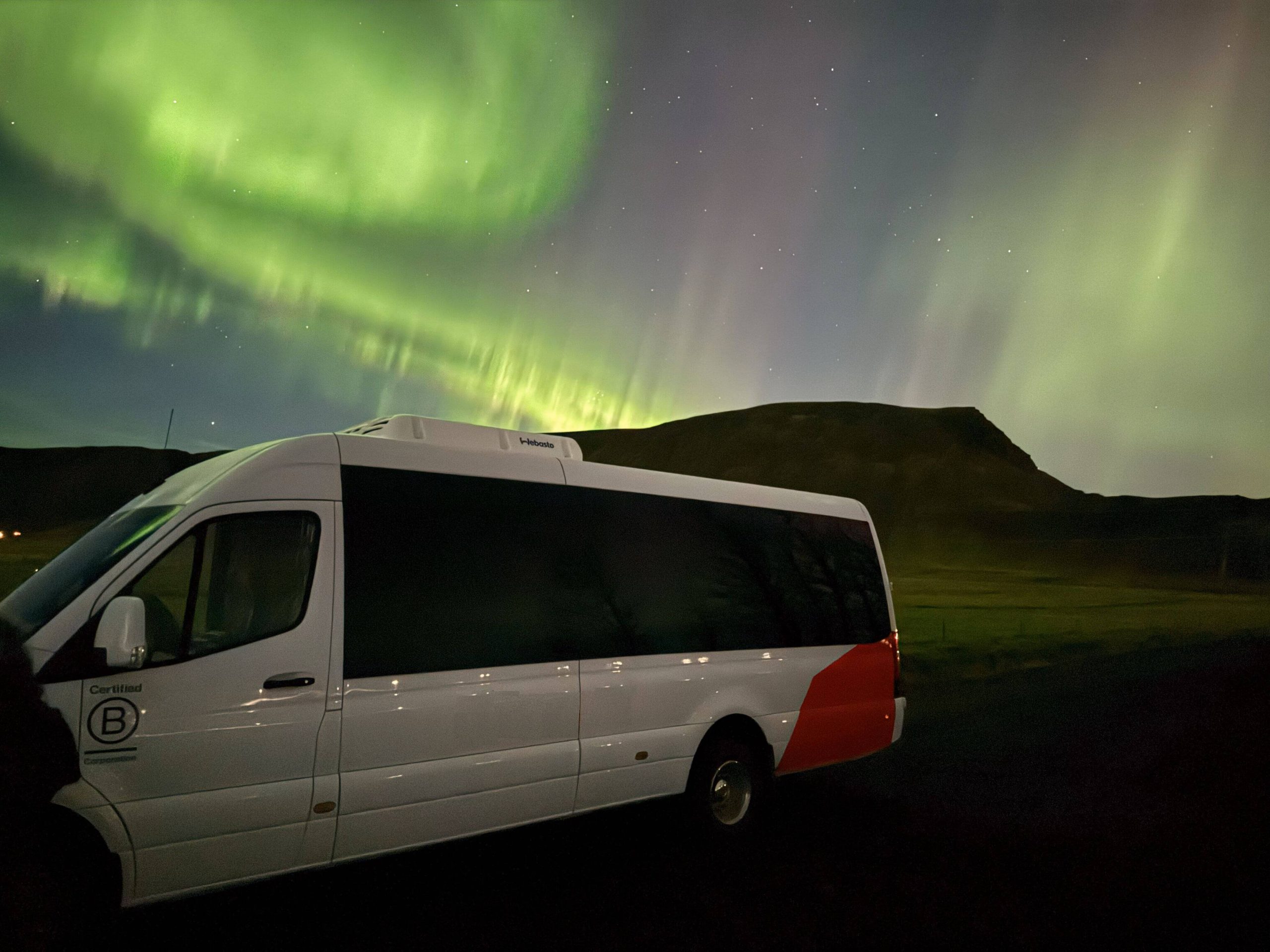
Embracing Iceland may offer Northern Lights tours in wintertime. It is important to realize that even with good weather conditions and a clear sky on a cold winter night, there is never a guarantee that the auroras will light up the sky.
At the Icelandic Met Office you can see the weather conditions and cloud forecast that guide you to the Northern Lights every day. You can also explore the website Auroraforecast.is.